


Quick Summary
- Titanium filters excel in high-temp (280°C), high-pressure, high-abrasion applications
- UHMWPE filters offer inherent magnetic impurity control and avoid hydrogen embrittlement risks
- For lithium battery production with frequent chemical regeneration, polymer filters provide more predictable long-term reliability
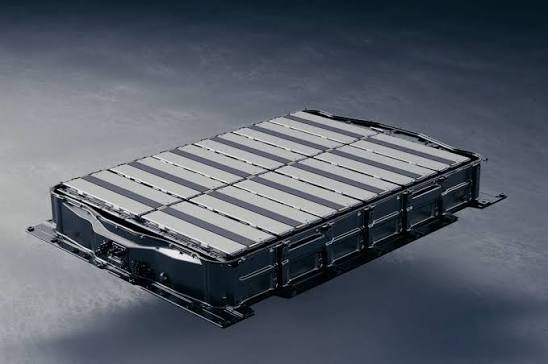
In lithium battery material production, filter selection now goes beyond conventional performance metrics. It increasingly involves trade-offs between product purity (particularly magnetic impurity control) and long-term operational reliability.
Two technical routes are commonly used in the industry: ultra-high molecular weight polyethylene (UHMWPE) sintered filters and titanium metal sintered filters. Among these, UHMWPE filters have gained broader acceptance in lithium battery applications, driven by their advantages in purity assurance and risk mitigation. Both technologies offer distinct benefits in chemical resistance, mechanical strength, and application suitability. This article examines their actual differences in lithium battery applications across three core dimensions.
1. Magnetic Impurities: Material Composition Defines the Risk Profile
Stringent magnetic impurity control standards are being enforced across battery material production lines. The industry definition of magnetic impurities—as specified in Chinese National Standard GB/T 41704-2022 for cathode material testing—refers to impurities that can be captured by a magnetic field of 0.5T (5000 Gauss) or higher, typically including Fe, Cr, Ni, and Zn elements or their compounds. Top-tier battery manufacturers are now pushing requirements to <30ppb total magnetic impurities and single-particle size <15μm. All contact materials used in filtration must therefore undergo rigorous evaluation.
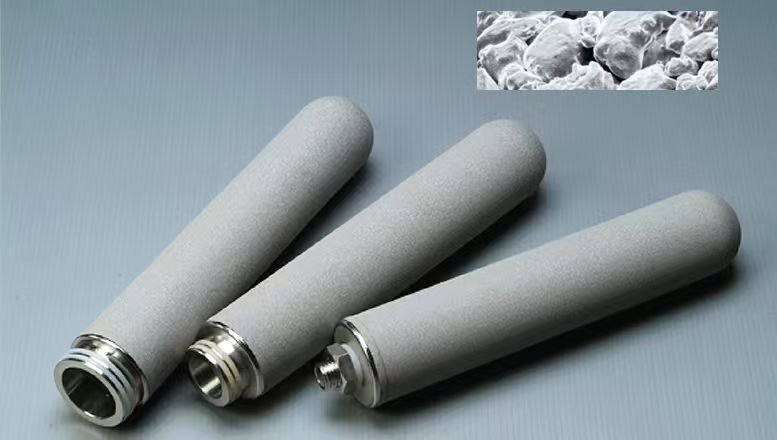
Titanium filters:
Titanium itself is not magnetizable, meeting basic “non-magnetic” requirements at a macro level. However, material composition warrants closer examination. Industrial high-purity titanium powder typically achieves purity levels of 99.4% to 99.6%, meaning approximately 0.4% to 0.6% of impurity elements remain. These include Fe (approx. 0.07%) and Mn (approx. 0.01%) — both elements that fall within the industry’s magnetic impurity definition.
These impurities exist in alloyed form within the material matrix. Under normal operating conditions, the titanium surface is protected by a passive oxide film (TiO₂), so dissolution risk remains manageable. However, when this passive film is compromised in aggressive chemical environments (such as strong acid regeneration), the potential for trace magnetic impurity dissolution or particle shedding increases — a factor that should be carefully evaluated in battery production lines with extreme purity requirements.
UHMWPE filters:
UHMWPE is a 100% polymeric material containing no metallic elements. From a material composition perspective, UHMWPE filters inherently eliminate the possibility of introducing magnetic impurities. This “source elimination” approach is fundamentally different from “risk mitigation through process control” — it addresses the issue at the material level rather than relying on downstream removal.
2. Hydrogen Embrittlement: A Failure Mode Requiring Attention in Specific Service Conditions
Hydrogen embrittlement is a well-documented engineering concern for titanium under specific service conditions.
Titanium is a strong hydrogen absorber. When titanium is chemically regenerated in strong acidic environments, the protective TiO₂ passive film can be damaged, allowing hydrogen atoms to diffuse into the titanium lattice. When hydrogen concentration exceeds certain thresholds, material ductility decreases, manifesting as increased brittleness.
Long-term test studies published by the Japan Atomic Energy Agency (2025) have confirmed that titanium exposed to nitric acid environments can develop hydrogen-embrittled zones with extensive cracking on side surfaces. In industrial practice, chemical cleaning of titanium equipment has been explicitly cautioned against hydrogen absorption and embrittlement. The industry-recognized mitigation strategy involves adding strongly oxidizing nitric acid to suppress hydrogen absorption — but this “reduces risk” rather than “eliminates” it.
In lithium battery filtration applications, filter elements undergo frequent chemical regeneration (e.g., nitric acid cleaning). With repeated regeneration cycles, hydrogen atoms progressively penetrate the titanium lattice. While this is a long-term, cumulative process rather than an immediate effect, it warrants serious consideration for filtration equipment designed for years of service life.
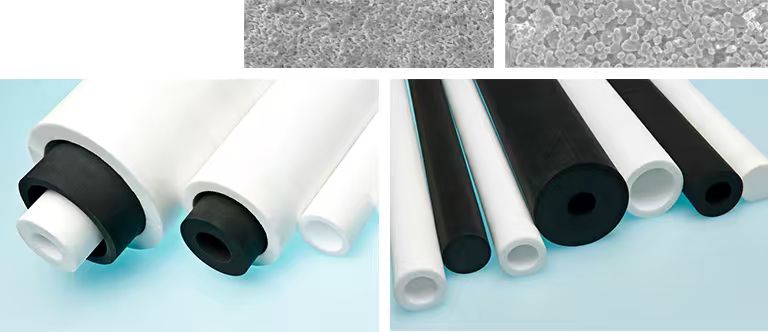
UHMWPE filters:
Polymeric materials do not present hydrogen absorption concerns. UHMWPE filter regeneration relies on the material’s inherent chemical inertness — the regeneration process does not alter the molecular structure or introduce new failure modes.
3. Lifetime and Reliability: Different Failure Mode Profiles
The two filter types exhibit distinctly different lifetime characteristics.
Titanium filter lifetime data is typically based on conventional chemical service conditions. In lithium battery applications — where frequent chemical regeneration and extreme purity requirements are the norm — lifetime performance needs careful evaluation. Titanium filters may experience potential failure modes involving “sudden fracture” under stress (such as backblow impact) after hydrogen embrittlement accumulates to critical levels.
This sudden failure risk complicates maintenance planning and creates potential for unscheduled downtime.
UHMWPE filters exhibit gradual, predictable “aging” — flux decline occurs progressively and can be restored through chemical regeneration. Without hydrogen embrittlement-related sudden failure modes, lifetime prediction and maintenance planning are more reliable. Customers can schedule maintenance based on predictable service life, avoiding unscheduled downtime.
Summary
| Comparison Dimension | Titanium Sintered Filter | Dongou UHMWPE Sintered Filter |
|---|---|---|
| Magnetic Impurity Risk | Titanium is non-magnetic, but industrial grades contain trace Fe and Mn (magnetic impurities by definition); dissolution risk is manageable when passive film is intact, but elevated in aggressive environments | 100% polymer — no metallic elements introduced from the material itself |
| Hydrogen Embrittlement | Hydrogen absorption possible in strong acid regeneration; cumulative long-term engineering consideration | No hydrogen embrittlement — regeneration does not alter material structure |
| Lifetime Reliability | Includes potential “sudden fracture” failure mode; maintenance is more challenging | Gradual decay with predictable lifetime; maintenance is controllable |
| Best Suited For | High-temperature (up to 280°C), high-pressure, high-abrasion applications | Applications requiring battery-grade purity and frequent regeneration |
When selecting sintered filters for lithium battery production, the choice between titanium and UHMWPE ultimately depends on your specific process conditions and purity requirements.
Final Thoughts
Titanium filters have clear technical advantages in high-temperature, high-pressure, high-abrasion chemical service conditions and represent a mature, reliable industrial filtration solution. However, in battery material production — where magnetic impurity tolerance is effectively zero, chemical regeneration is frequent, and ultra-stable operation is required — the presence of trace metallic elements in titanium and the cumulative hydrogen embrittlement risk are engineering factors that should be carefully considered.
Dongou UHMWPE sintered filters fundamentally eliminate metallic element introduction and intrinsically avoid hydrogen embrittlement — making them a more direct choice for lithium battery applications where these two dimensions are paramount.
In lithium battery filtration, material purity assurance and predictable failure modes are equally as important as high-temperature tolerance. Neither filter type is categorically superior — the right choice depends on specific application requirements and quality control standards.
Dongou Filter · 40 Years of Polymer Sintered Filter Expertise
For application-specific selection based on your process conditions (material characteristics, solids content, target precision), please contact our technical team. CONTACT